
Reviewed · BITOLA DAY TRIPS
Stobi from Skopje
Roman ruins with a short drive.
If you want ancient history that feels readable, this trip to Stobi is a great pick, with a smart add-on stop at the Kozhle Monastery area. The guide brings Stobi’s story to life, from Paeonia roots to Macedonian takeover and then Roman power, when it became the capital of the province Macedonia Salutaris. I also like the pacing, you get a focused guided walk plus a photo-friendly break, and the small group size helps you actually hear what matters. One thing to consider, the walk is not wheelchair friendly and the ground can be uneven.
This is also one of those tours that gives you more than ruins. You travel through the same road corridor that mattered to armies and traders for centuries, between the Danube side and the Aegean direction, so the setting clicks once you’re there.
In This Review
- Key things you should know before you go
- Stobi’s power story: why this place mattered
- Getting from Skopje to Kozhle: the drive part that still counts
- Kozhle and Holy Marija Monastery: where the photos make sense
- Stobi on foot: how to see the site instead of just passing through
- What the tour includes, and why that changes the value
- Timing and pacing: why 3.5 to 4 hours feels just right
- What to bring and how to prepare for the walk
- Who this tour is best for, and who should rethink it
- Should you book Stobi from Skopje?
- FAQ
- How long is the Stobi from Skopje tour?
- Where does the tour start?
- How many people are in the group?
- What stops are included besides Stobi?
- Is the entrance ticket for Stobi included?
- What languages is the live guide available in?
- What should I bring with me?
- Is the tour wheelchair accessible?
- What if the weather changes?
Key things you should know before you go
- Stobi’s real claim to fame: it was a Roman provincial capital, not just a random set of stones
- Kozhle and Holy Marija Monastery views: a photo stop that breaks up the drive with a calm, scenic pause
- Small group, max 7 people: less crowd noise, easier questions, better guide attention
- A licensed guide and included entry ticket: you are not guessing where to look
- Built at a strategic river junction: Erigon (Crna River) meets Axios (Vardar), and that matters for the story
- 3.5 to 4 hours total: a half-day feel that still gives you real context
Stobi’s power story: why this place mattered
Stobi, near Gradsko, sits right where two major rivers meet, the Erigon (Crna River) and the Axios (Vardar). That junction is not just scenery, it is why the city became important for trade and warfare. When a place controls movement, people pay attention, and that’s the thread your guide will keep following.
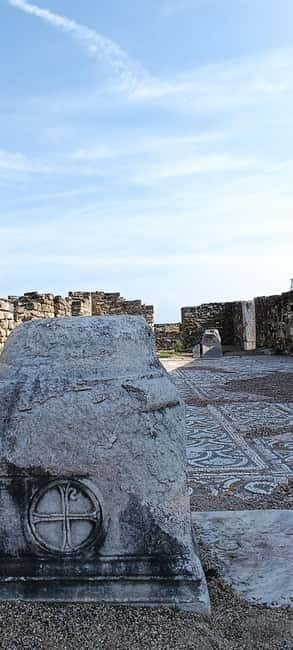
The city begins in the Paeonian world, then gets conquered by Macedon. After that, it goes Roman in a big way. Stobi later becomes the capital of the Roman province Macedonia Salutaris, which is a fancy title with a simple effect: you should expect big governance energy, impressive infrastructure, and the kind of building projects that show up in the archaeological remains.
The historical timeline is dramatic, and it helps you understand why Stobi has layers. It is first written about by the historian Livy, tied to Philip V of Macedon’s victory over the Dardani in 197 BC. Then the Romans change the map, when they defeat Perseus in 168 BC and Macedonia gets split into four nominally independent republics. In 148 BC, the Roman province brings those areas back together in unified form.
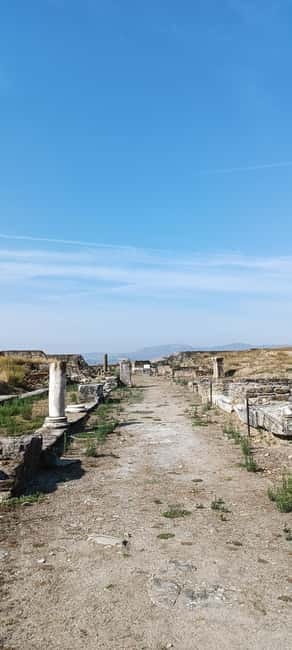
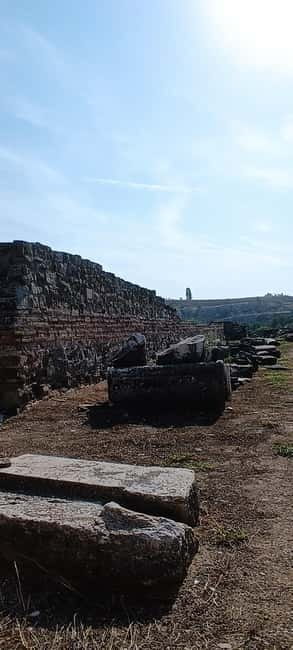
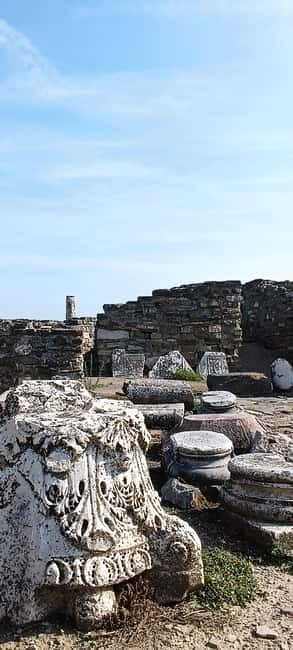
So when you stand in Stobi, you are not looking at one era. You are looking at a place that kept getting rebuilt, interrupted, and repurposed. That is why a guided tour helps. Without the context, it is easy to treat the site like a pile of old walls. With the context, it starts to feel like a living map of who controlled this road corridor.
More trips south to Bitola and Heraclea:
Getting from Skopje to Kozhle: the drive part that still counts
The tour starts with pickup in Skopje. You go by comfortable car, and you get a transfer of about 30 minutes to the area around Kozhle. This matters because you are not wasting your half-day bouncing between buses, taxis, and ticket lines. Instead, you settle in and let the guide handle the flow.
After the initial ride, you get a break that is more than a snack stop. There’s a photo stop at Kozhle, and then you move into a visit plus some time for coffee and tea. Expect a short walk as part of the break window, roughly 25 minutes.
I like this kind of structure for two reasons. First, it keeps the tour from feeling like a one-spot sprint. Second, it gives your eyes time to adjust from city life to countryside light, which makes your photos better later at Stobi.
One small practical note, wear sunscreen and bring your sunglasses. Even when the schedule looks light on paper, you will be outdoors and you will want to keep your eyes comfortable for the guided talk.
Kozhle and Holy Marija Monastery: where the photos make sense
Kozhle is the spot where the tour shifts gears, away from pure travel mode and into a quieter, scenic pause. The highlight list points to Holy Marija Monastery, and the plan includes a photo shoot stop at Kozhle before you head toward Stobi.
What you should do here is simple: slow down for a few minutes. Find a viewpoint, take a breath, and look at how the land sits around the road. A monastery stop can turn into a quick stamp-and-go stop on some tours, but this one is built as a reset. You also get that brief visit time, plus the coffee and tea break, so it does not feel like you are rushing past something meaningful.
Why this monastery add-on is worth your time? Because it gives you a human scale before you face the big story of an ancient city. After Kozhle, Stobi feels less like a disconnected site and more like the next chapter in the same region, just earlier and more powerful.
And yes, this is the kind of day where weather can surprise you. One memorable experience described snow adding a unique atmosphere and making the views during the ride extra special. You cannot plan for snow, but you can plan for it by dressing in layers and keeping an eye on the sky.
Stobi on foot: how to see the site instead of just passing through
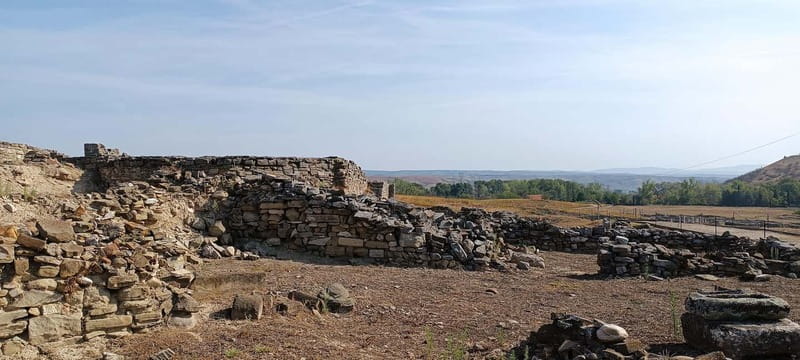
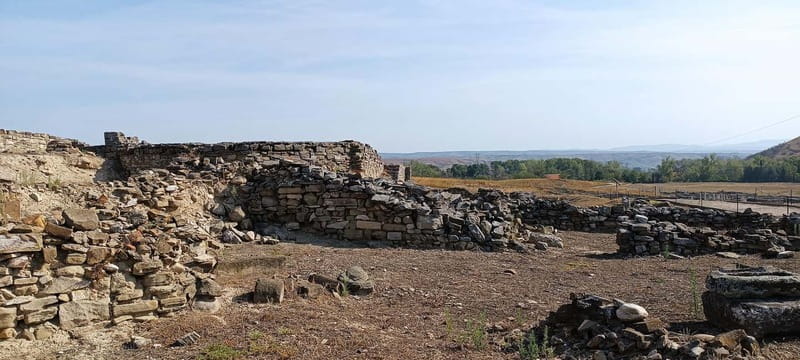
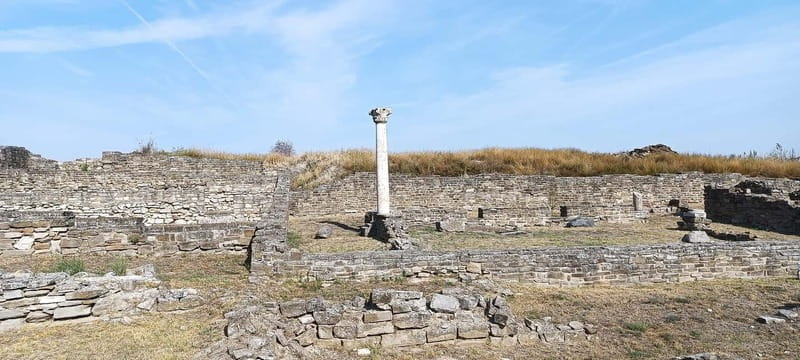
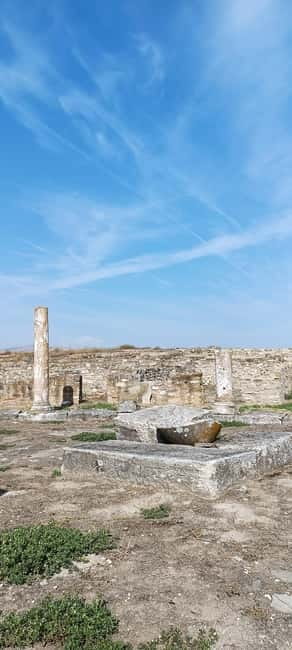
The main event is the guided tour and sightseeing at Stobi, with about 75 minutes of guided time on site. There’s also a photo stop set up before the walk, which helps you get an easy overview before your guide starts putting meaning behind the remains.
Here’s what I recommend you focus on while you’re walking. Instead of trying to memorize names of structures, think in layers. Your guide will explain that Stobi went from Paeonia roots to Macedon control, then into Roman prominence as a provincial capital. Once you understand that sequence, the ruins stop feeling random.
Also, keep the rivers in your mind. Stobi was built where Erigon (Crna River) meets Axios (Vardar). That geographical detail is the reason the city mattered for trade routes and for military movement. When you can mentally connect the river junction idea to what you are seeing on the ground, you start to understand why Stobi rose and why it kept being fought over.
The historical twists add emotional punch too. Emperor Theodosius I stayed in Stobi in 388. Later, in 479, the city was robbed by Theodoric, an Ostrogothic king. Then came reconstruction, followed by disaster again when a powerful earthquake struck in 518. In the 6th century, Avaro-Slavic invasions destroyed Stobi’s economy and infrastructure. That is a lot for one location to survive, and it is exactly why the site feels so “worked over” by time.
If you love asking questions, this is where your small group helps. With only about 7 participants, you are more likely to get clear answers and not just a rushed lecture while everyone else tramps ahead.
And if you are the type who likes practical photo tips, here is one: use the guided walk to learn where the guide wants your attention, then take your own photos during the transitions. You get better images because you know what you are photographing.
More tours based in Skopje:
- Skopje: Matka Canyon, Millennium Cross and Etno Village Tour
★ 4.7 · 1,906 reviews - Skopje: Matka Canyon, Millennium Cross & Village Tour
★ 4.8 · 1,019 reviews - Walking In Skopje
★ 5.0 · 390 reviews - From Skopje:Kosovo in a Day-Group Tour to Pristina & Prizren
★ 4.7 · 372 reviews
What the tour includes, and why that changes the value
At $118 per person for a 3.5 to 4 hour outing, the first question is always value. Here, the value comes from three places.
First, you get a licensed guide, which means you are not trying to decode a complex multi-era archaeological site by yourself. Stobi’s story spans Paeonia, Macedon, and Rome, plus major events in the late antique period. Without interpretation, you would likely miss the point of what you are standing on.
Second, pickup and transfers are included. That sounds minor until you do it. Then you realize how often half-day tours fall apart due to logistics. This one uses a comfortable car and keeps your day tight and predictable.
Third, you get refreshment along the way and an entrance ticket for Stobi included. Coffee and tea during the break is not the reason to book, but it helps. It keeps the pace human, especially if you time your day around morning or mid-day temperatures.
There’s also a small-group factor that matters. A tour capped at 7 participants usually means less waiting, more conversation, and easier re-grouping after photo stops.
One more detail from real-world experiences, guides can go above and beyond. One trip highlighted Sandra as an absolute favorite, with great driving and guiding throughout. That same experience included an extra suggestion for lunch in Veles, which turned a half-day plan into something far longer for that group. Another experience mentioned a small piece of self-baked cake during the ride. Those are not guaranteed, but they hint at the kind of friendly, personal service that can make the day feel less like a checklist.
Timing and pacing: why 3.5 to 4 hours feels just right
This tour is built as a focused half-day. You are on the road in two main transfers, roughly 30 minutes to the area and then about 25 minutes after the break before heading to Stobi. The guided time on site is about 75 minutes, then you have the final transfer back to Skopje, around 1 hour.
That pacing works if you want depth without fatigue. Stobi is the anchor, and Kozhle is the supporting act. You are not stuck in a full-day schedule, but you still get enough time to hear the story and walk at a reasonable pace.
Still, be realistic about the rhythm. You will likely do some uneven-footing walking. You will also spend time outdoors during photo stops. If it is hot, you will feel it. Bring the basics, hat and sunscreen, and you will enjoy the experience more.
What to bring and how to prepare for the walk
You do not need special gear, but you do need common sense.
Bring:
- Sunglasses
- Sun hat
- Camera
- Sunscreen
- ID card (a copy is accepted)
Also dress for the weather. If you visit in winter or shoulder season, plan for the fact that conditions can change fast. One described day included snow, and it made the ride and views feel extra memorable. Even if you never see snow, layers are smart, because car rides can be warm and outdoor photo stops can be cold.
Finally, bring your curiosity. Stobi’s story is not only about dates. It is about how a strategic crossroads city gets pulled into power struggles, natural disasters, and reconstructions. A guide can tie those threads together in a way that makes the ruins feel logical.
Who this tour is best for, and who should rethink it
This tour is a strong match for history lovers who like guided context. If you care about how Roman provinces worked, or you enjoy tracing the shift from Paeonia to Macedon to Rome, Stobi’s timeline gives you plenty to chew on.
It is also a good match for photographers who want a couple of set moments. Kozhle gives you one photo window, Stobi gives you the next. The key is that both are integrated into the day, not tacked on.
Who might rethink it? The tour is not suitable for wheelchair users, and the site involves walking. If you have mobility limitations or you do not handle uneven ground well, you may want a different style of tour or to ask for alternatives in advance.
Should you book Stobi from Skopje?
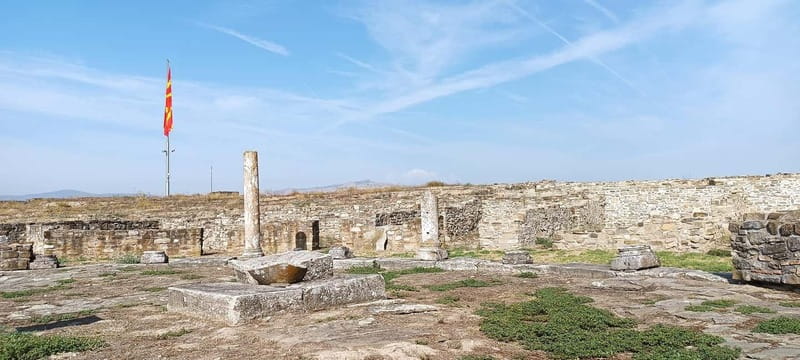
I think you should book this tour if you want a half-day plan that actually teaches you something. Stobi is the main reason to go, and the guide is the difference between seeing ruins and understanding why they matter. The included entrance ticket, refreshments, and pickup make it feel easy, not like an exercise in coordination.
If your idea of travel is mostly wandering with no structure, you might feel a guided pace is limiting. But if you enjoy short drives, clear explanations, and a couple of standout viewpoints along the way, this one is a very solid value at $118 for a guided, small-group experience.
FAQ
How long is the Stobi from Skopje tour?
The duration is about 3.5 to 4 hours.
Where does the tour start?
The tour includes pickup from your apartment or hotel in Skopje.
How many people are in the group?
It is a small group, limited to 7 participants.
What stops are included besides Stobi?
The plan includes a photo stop and visit near Kozhle, with time for coffee and tea, and then the main visit at Stobi.
Is the entrance ticket for Stobi included?
Yes, the entrance ticket for Stobi is included.
What languages is the live guide available in?
The live guide is available in German, English, Serbo-Croatian, and Bulgarian.
What should I bring with me?
Bring sunglasses, a sun hat, a camera, sunscreen, and your ID card (a copy is accepted).
Is the tour wheelchair accessible?
No, it is not suitable for wheelchair users.
What if the weather changes?
The tour includes outdoor photo stops and walking, so it helps to dress for changing conditions. One experience described snow during the ride, which made the views feel unique.
New on the site from Skopje
- Traditional cooking class at home★ 5.0 · 1 review
- Vinica, Lesnovo Monastery and Kratovo tour from Skopje★ 5.0 · 1 review
- Skopje city tour★ 5.0 · 1 review
- Relaxing Walking Tour in Skopje★ 5.0 · 1 review
- Private Skopje Tour with Visit to Vodno Mountain and Matka Valley★ 5.0 · 1 review
- Private Full-Day Tour of Ohrid from Skopje with Transfers★ 5.0 · 1 review
Bitola Day Trips, compared.
Full Day Jeep Safari Pelister Tour from Ohrid and or Bitola
Read our review →
Private Full-Day to Ohrid and Bitola from Skopje
Read our review →
Browse the lists this tour appears in