
Reviewed · BITOLA DAY TRIPS
From Skopje: Bitola and Ohrid Day Tour
Two Macedonian cities, one easy day. I love how this private tour strings together Ottoman-era Bitola and lakeside Ohrid without the stress of planning, and I also like the chance to see standout stops like the Ohrid Lake viewpoints. The only watch-out is that it is a long 10-hour day, so plan for lots of walking and no included meal.
On the day tours run through Plus Travel Skopje, you might spend the route with guide Susanna, who shares the story behind the sights in a way that feels warm and personal. Driver Viktor is also noted as kind and professional, which helps when the schedule moves from town to town.
Pickup and drop-off are handled at your accommodation, in an A/C car or van with a licensed guide in English, Italian, Spanish, or German. You get some break and free time in Ohrid, plus shopping time, but you will be buying your own meal and drinks.
In This Review
- Key things that make this Bitola and Ohrid day tour worth it
- A 10-hour private road trip with real structure
- Bitola’s Sirok Sokak, Clock Tower, and the Manaki connection
- Heraclea Lynkestis: a short walk into the 4th century BC
- Ohrid’s St. Sophia, the Roman amphitheater, and the Icon Gallery
- Plaoshnik and St. Clement’s relics, plus ancient mosaics
- Tsar Samoil’s Fortress and St. Jovan at Kaneo
- Lake time: walk back through town or choose the boat option
- Price and logistics: how $247 per person stacks up
- Who this Bitola and Ohrid day tour is best for
- Should you book it or pass?
- FAQ
- How long is the Bitola and Ohrid day tour from Skopje?
- Where does the tour pick up and drop you off?
- Is this a private tour?
- What is included in the price?
- Are meals and drinks included?
- Which languages is the live tour guide available in?
- What stops are included in Bitola and Ohrid?
- Is there free time in Ohrid?
- Can I reserve now and cancel if plans change?
Key things that make this Bitola and Ohrid day tour worth it
- A true two-city combo that pairs Bitola’s 19th-century streets with Ohrid’s famous church sites and lake views
- Bitola’s landmarks in a tight loop including St. Dimitri, the Clock Tower, and Sirok Sokak’s old houses
- Mosques with a story like the Yeni Mosque (built in 1559 and now an art gallery) plus the Yahdar-Kadi and Isak Mosques
- Heraclea Lynkestis ruins for a focused walk tied to the 4th century BC
- Ohrid’s icons and frescoes through stops like the Icon Gallery and St. Clement’s Church of the Holy Mother of God Most Glorious
- Lake time that you can choose returning on foot or taking the boat option for a lake tour perspective
A 10-hour private road trip with real structure
This is a straightforward, end-to-end day plan. You get picked up from your accommodation in Skopje, ride in an A/C car or van, and spend the day with a licensed guide who keeps the flow tight. You finish back at your accommodation in Skopje, so you are not scrambling for transport at the end of the day.
The pace is built around short guided segments and then time to move, look, and reset. Bitola is handled with about 80 minutes on the ground, Heraclea Lynkestis gets around an hour, and Ohrid has about 3 hours with guided sightseeing plus free time.
One practical note: meal and drinks are not included. With a 10-hour duration, that matters. I recommend thinking like this tour is a day of walking plus museum and church stops, then planning to eat once you have time to breathe.
More trips south to Bitola and Heraclea:
Bitola’s Sirok Sokak, Clock Tower, and the Manaki connection
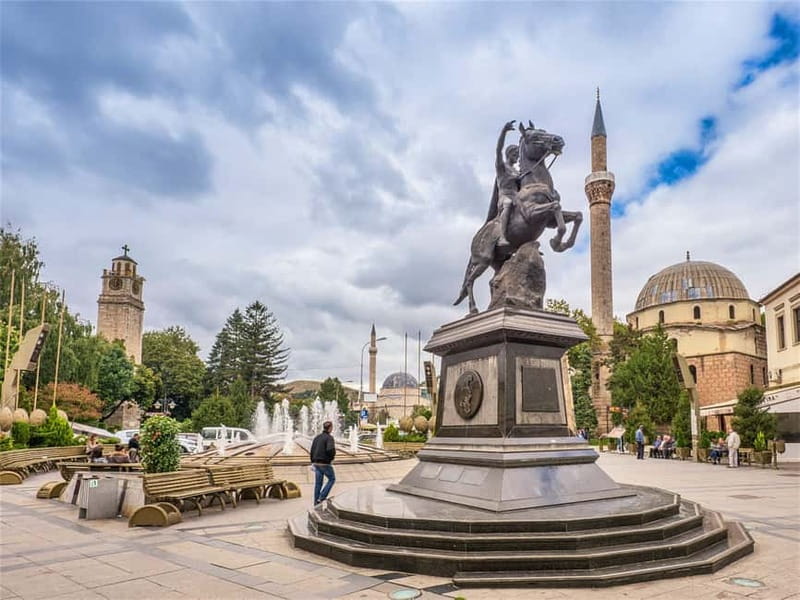
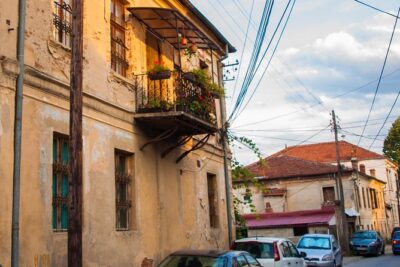
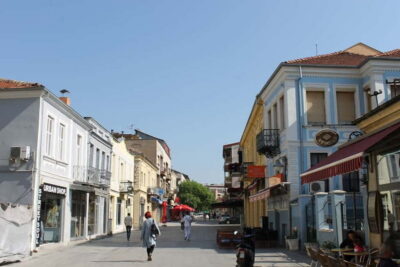
Bitola is a city that feels like multiple eras sitting side by side. The tour starts with a guided sightseeing look around town, and it is a great introduction if you want Ottoman-era landmarks and 19th-century streets without spending days on logistics.
Here is what you can expect to cover in Bitola:
- The church of St. Dimitri, which anchors the sightseeing with a strong historic and religious landmark
- A quick look at the Yeni Mosque (built in 1559) which is now an art gallery
- The Yahdar-Kadi Mosque and the Isak Mosque
- The Clock Tower, placed right in the heart of town for easy orientation
- The River Dragor running through Bitola, which helps you understand how the city developed around movement and trade
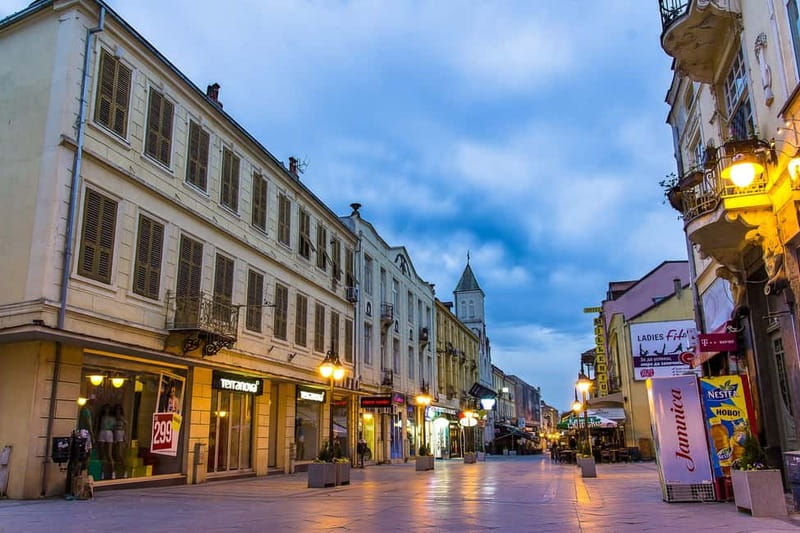
- Sirok Sokak, the long pedestrian area known for beautiful old houses from 19th-century architecture
If you like photos, Bitola is generous. Even with a short visit, you get street scenes, architecture details, and landmarks that give your pictures context, not just pretty buildings.
Then there is the film and photography connection, and it is more than a fun fact. Bitola is described as a town of consulates, and it is also where the Manaki brothers opened their Studio of Art Photography in 1905. The tour also points out that, in honor of their work later tied to cinematography, the first international film camera festival in the world started here in 1979, held every September. Even if you visit on a non-festival month, it helps you see the city as a creative hub, not only a historic stop.
What to keep in mind in Bitola: you will see a lot quickly. That is great if you want highlights, but it also means you should treat this as an introduction rather than a full deep visit.
Heraclea Lynkestis: a short walk into the 4th century BC
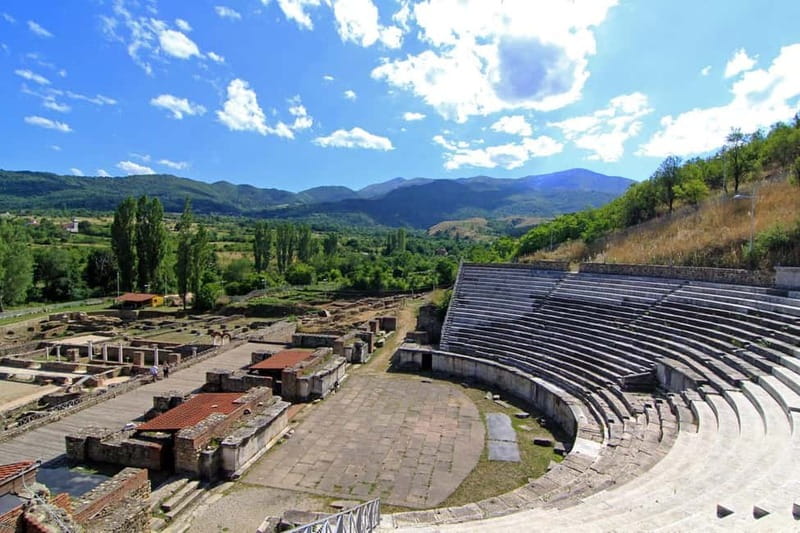
After Bitola, the tour moves to Heraclea Lynkestis, an ancient Macedonian town established in the 4th century BC. This is the kind of stop that can be easy to skip if you are only chasing churches, but it adds a different flavor to the day.
You get a photo stop, then a guided visit and sightseeing, plus a walk of about an hour. That hour is the sweet spot for ruins: enough time to grasp the scale and layout, but not so much that you lose the momentum you need for Ohrid later.
The big value here is contrast. Bitola brings Ottoman-era mosques and 19th-century streets, while Heraclea Lynkestis brings the far older story of the Pelagonia valley. If you care about how places layer over time, you will feel the timeline more clearly on this day than on a single-city trip.
Ohrid’s St. Sophia, the Roman amphitheater, and the Icon Gallery
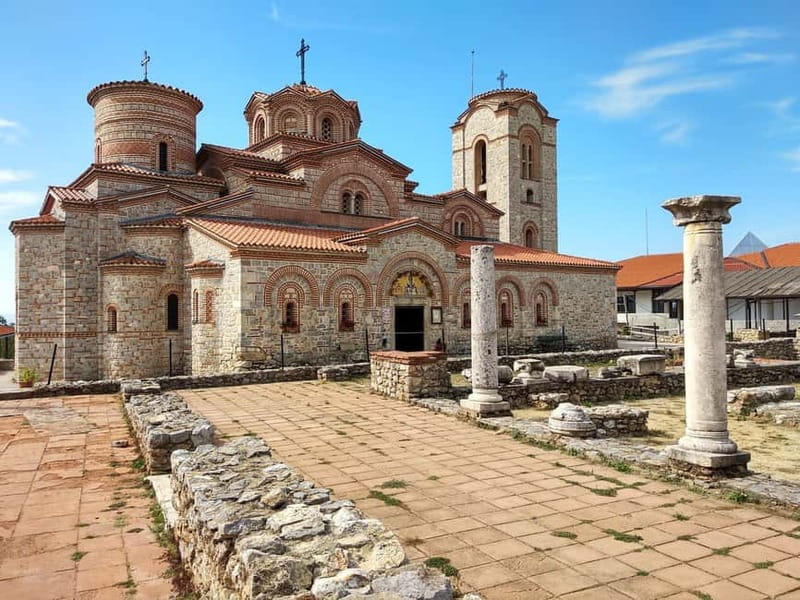
Ohrid is where the day turns from “wow, buildings” to “wow, art and devotion.” The tour begins with St. Sophia, dating to the 11th century. From there, you head toward the Roman amphitheater, dating back to the 3rd century BC. That pairing is smart. It shows you how Ohrid held onto different identities across centuries.
Next comes the Icon Gallery, which the tour notes includes icons among the most famous and valuable in the world, compared to the icons at Athos and in Russia. Even if you are not an icon specialist, the gallery stop tends to give you that rare feeling of standing near objects that people have guarded and revered for generations.
And then you keep the art theme moving into church frescoes:
- St. Clement’s Church of the Holy Mother of God Most Glorious, dating from the 13th century, is highlighted for its valuable 13th-century frescoes, described as among the best not only in the country but across the Balkans.
This is where a good guide matters. When the guide explains what you are seeing, you stop treating the artwork as a checklist and start noticing details like style and historical context.
Practical consideration for Ohrid: you are going to be on your feet through a run of major sites. Build in a calm attitude. This tour gives you a break and free time, but the guided blocks are focused.
More tours around Lake Ohrid:
- Ohrid: Old Town Panoramic Boat Cruise and Tito’s Residence
★ 4.9 · 244 reviews - Monastery Winery Tour and Wine Tasting
★ 5.0 · 195 reviews - From Skopje: Full-Day Group Tour to the UNESCO City of Ohrid
★ 4.8 · 144 reviews - Ohrid: Monastery Winery Tour and Wine Tasting
★ 4.8 · 124 reviews
Plaoshnik and St. Clement’s relics, plus ancient mosaics
Plaoshnik is one of the most important stops on the route, and it is packed with meaning. You visit the newly built St. Clement’s Monastery Church, dedicated to St. Clement and St. Panteleimon. It stands beside the original site of St. Clement’s University, described as the first university of the Macedonian Slavs, starting in the 9th century AD.
Inside the church, you can see the tomb with St. Clement’s relics. That makes the stop feel more personal than a typical sightseeing stop, because it is tied to a specific patron and tradition.
Then, right beside the church, you get foundations of a 5th-century basilica with mosaic floors. The tour also mentions that some swastikas were discovered on the floors. It is worth being mentally prepared for how old historical sites can contain symbols that feel complicated today. The context here is archaeological, tied to what was found on the mosaic floors.
This stop is also a pacing win. You get a major spiritual and historical focal point, then you still have enough time to keep moving toward views and viewpoints later.
Tsar Samoil’s Fortress and St. Jovan at Kaneo
After Plaoshnik, the tour heads toward Tsar Samoil’s Fortress, named after Tsar Samoil, described as the first tsar of the Macedonian Slavs. The tour frames the story as one where he conquered Byzantium and brought much of Macedonia under his rule. Even if you only catch the key plot points, the fortress stop gives you a sense of how power and defense shaped Ohrid’s upper areas.
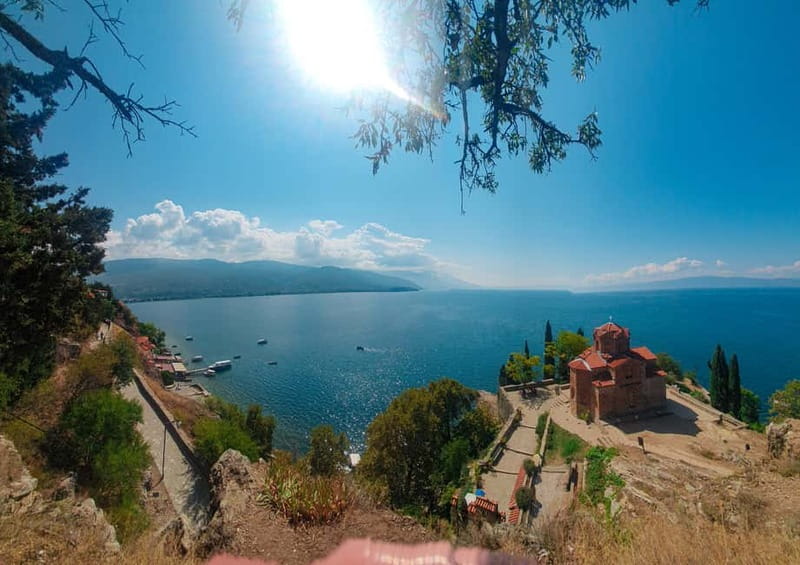
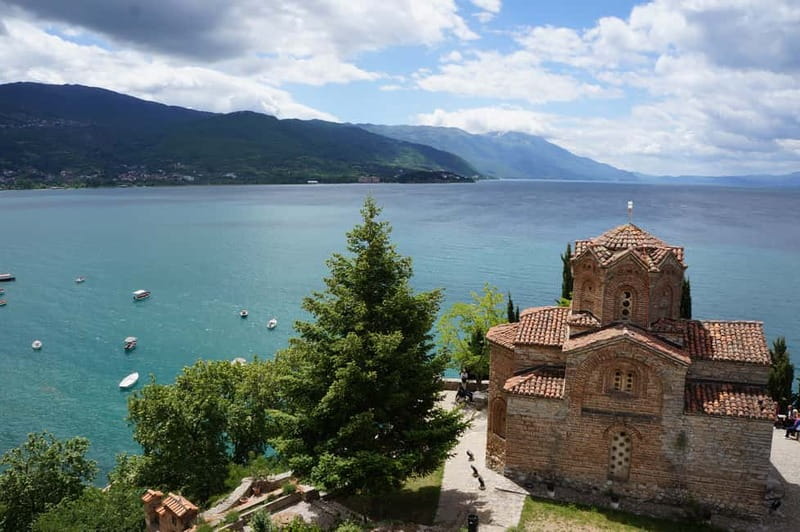
Next is the Church of St. Jovan at Kaneo, built at the end of the 13th century. This church is described as one of the most frequently visited in Ohrid thanks to its location on cliffs directly above the lake.
If you enjoy photographing religious architecture with a view, this is a standout. The cliffs above the lake turn the church from a building into a postcard-with-context moment.
Lake time: walk back through town or choose the boat option
Toward the end, you return back toward the town. You can do it on foot, and that tends to be the most flexible choice when you want to browse or pause at whatever grabs your attention.
There is also an option: return to town by boat and at the same time take a tour of the lake, which the tour specifically promises as providing great views of the town. The boat choice is ideal if you want a different angle on Ohrid and you like the idea of resting your legs while still seeing.
Either way, this ending section works because it shifts from “guided facts” to “your time with the place.” And that is when your photos usually turn out best, because you are less rushed.
Price and logistics: how $247 per person stacks up
At $247 per person for a 10-hour private tour, you are paying for more than transport. You are paying for:
- Pickup and drop-off from your accommodation in Skopje
- A/C transfer by car or van
- A licensed tour guide
- A full day that combines Bitola plus an ancient site plus Ohrid in one go
This cost makes the most sense if you value saving time and avoiding the hassle of stitching together separate trips. It also tends to fit better for small groups or couples, where private transport and a guide are more cost-efficient than paying for multiple separate guided tours.
What could make it feel expensive is exactly what you might expect from a highlights tour: meal and drinks are not included, and the stops are packed into one day. If you know you need a slower pace with longer museum time, consider whether you want a multi-day approach instead.
Still, the overall tone is that it is seen in a calm way. One guide-and-driver combo is described as making the day pleasant, informative, and not frantic. If you are the type who likes to see a lot while still moving at a human pace, this tour is designed for that.
Who this Bitola and Ohrid day tour is best for
I think this tour suits you if:
- You want two major cities in North Macedonia in one day without self-planning
- You care about churches, icons, and historical layers, not just views
- You prefer a licensed guide to connect the dots between sites
- You like private group comfort and being picked up right at your accommodation
It may not be the best fit if:
- You need a short day with minimal walking, because the schedule is full and Ohrid has multiple major stops
- You are counting on included meals, since meals and drinks are not part of the package
- You want deep time in one single location, because this day is built as a highlights route
Should you book it or pass?
Book this tour if you want a well-structured day that takes you from Skopje to Bitola and Ohrid, with a guide who brings the sites to life and a route that balances major landmarks, art stops, and viewpoint moments. It is especially compelling if you like the idea of mixing Ottoman-era architecture, ancient ruins at Heraclea Lynkestis, and Ohrid’s religious art and church locations, then ending with optional lake time.
Consider passing if you are planning a trip focused on one city, or if you know you get worn out by long days with multiple guided stops. In that case, a slower pace can feel more satisfying.
If you do book, do yourself a favor: plan to eat outside the tour, wear comfortable shoes for city walking, and treat Ohrid’s final stretch as your chance to linger and enjoy, not just rush through.
FAQ
How long is the Bitola and Ohrid day tour from Skopje?
The tour lasts 10 hours.
Where does the tour pick up and drop you off?
Pickup is from your accommodation in Skopje, and the tour includes drop-off back to your accommodation.
Is this a private tour?
Yes. It is a private group tour.
What is included in the price?
It includes pickup from your accommodation, A/C car or van transfer, a licensed tour guide, and drop-off back to your accommodation.
Are meals and drinks included?
No. Meal and drinks are not included.
Which languages is the live tour guide available in?
The guide is available in English, Italian, Spanish, and German.
What stops are included in Bitola and Ohrid?
Bitola includes St. Dimitri, the Yeni Mosque (now an art gallery), Yahdar-Kadi Mosque, Isak Mosque, the Clock Tower, and Sirok Sokak, plus a visit connected to the Manaki brothers and film festival mention. Ohrid includes St. Sophia, the Roman amphitheater, the Icon Gallery, St. Clement’s-related churches at Plaoshnik (including the monastery church and relic tomb), Tsar Samoil’s Fortress, and St. Jovan at Kaneo.
Is there free time in Ohrid?
Yes. The schedule includes a break and free time in Ohrid, including time for sightseeing and shopping.
Can I reserve now and cancel if plans change?
You can reserve now and pay later. You can also cancel up to 24 hours in advance for a full refund.
New on the site from Ohrid
- Ohrid: Watersport Adventures★ 5.0 · 1 review
- Ohrid city walking tour★ 5.0 · 1 review
- Yoga classes★ 5.0 · 1 review
- Private Transfer from Ohrid to Airport Skopje★ 5.0 · 1 review
- Hiking to Magaro peak from Ohrid★ 5.0 · 1 review
- Sightseeing Transfer from Ohrid to Skopje Via National Park Mavrovo★ 5.0 · 1 review
Bitola Day Trips, compared.
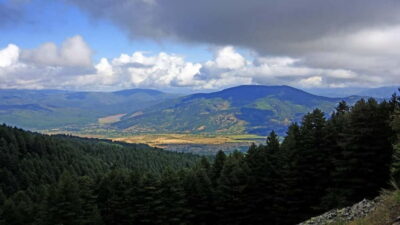
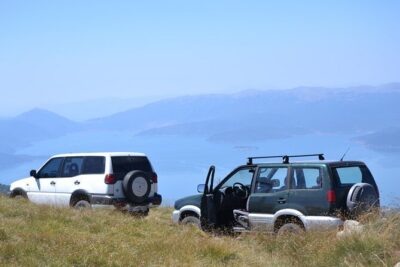
Full Day Jeep Safari Pelister Tour from Ohrid and or Bitola
Read our review →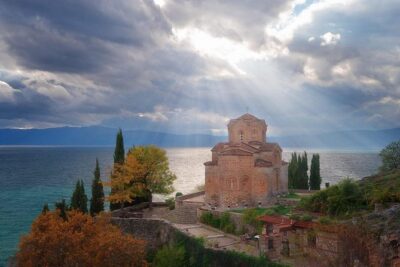
Private Full-Day to Ohrid and Bitola from Skopje
Read our review →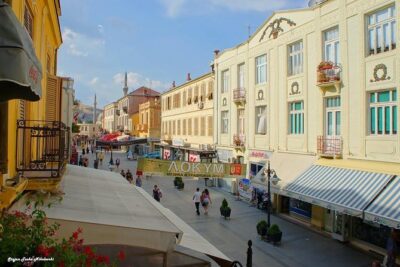
Browse the lists this tour appears in