
Reviewed · BITOLA DAY TRIPS
Full-Day Private Tour to Ohrid and Bitola from Skopje
Two old towns, one smooth private day. I love the private pacing and easy Skopje pickup, because it lets you move at a comfortable speed instead of syncing with a big group. I also love the Lake Ohrid views, especially around the cliffside churches where the water and town feel instantly cinematic.
The main thing to plan for is that this is a full day and it is not a free-for-all feast. You will want to budget extra for entrance fees (not included) and expect some steady walking, even if each stop is relatively short.
In This Review
- Key highlights you should care about
- Why Ohrid and Bitola Work So Well in a Single Day
- Your Skopje Pickup and the A/C Ride That Keeps You Moving
- How the Day Flows: Ohrid First, Then Bitola
- Ancient Theatre of Ohrid: Acoustics as a Time Machine
- Church of the Virgin Mary Peribleptos: Frescoes With Real Names
- Tsar Samuel’s Fortress and Plaoshnik: Layers of Macedonia
- St. Jovan Kaneo: The Cliffside Church Photo You Will Remember
- Church of Hagia Sophia: Cathedral Status and Fresco Renovation
- A Coffee Pause on Shirok Sokak Street
- Heraclea Lynchestys: Roman-Era Bones Near Bitola
- Bitola Museum and the Ataturk Memorial Room
- Price and What You’re Really Paying For
- Who This Tour Suits Best
- Tips to Make the Day Feel Easier
- Should You Book This Ohrid and Bitola Private Tour?
- FAQ
- How long is the private tour from Skopje to Ohrid and Bitola?
- What is the price per person?
- Is pickup and drop-off included?
- Is this tour private?
- What transportation is provided?
- Are entrance fees included?
- Are food and drinks included?
- Will I have an English-speaking guide?
- Do I receive a ticket on my phone?
- Is there free cancellation?
Key highlights you should care about
- A true private tour: only your group, with an experienced English-speaking guide/driver
- Two historic towns in one day: Ohrid first, then Bitola, plus key nearby sites
- Named artists and major Byzantine details at the Church of the Virgin Mary Peribleptos
- Plaoshnik’s education link: St Clement, early Slavic learning, and the Cyrillic alphabet connection
- The cliff-and-lake photo moment at St. Jovan Kaneo
- A surprise modern thread in Bitola Museum with a memorial room for Ataturk’s training location
Why Ohrid and Bitola Work So Well in a Single Day
If you only have a day from Skopje, this itinerary makes sense. Ohrid brings the lake, the churches, and the medieval soul of the region. Bitola adds a different rhythm, with Ottoman-era echoes and major archaeological remains nearby, so the day feels like two chapters instead of one long museum run.
What I like best is that the tour is private, so you are not locked into a robotic script. You get a guided plan with standout stops, and you still have a bit of freedom in how you spend the time. That matters when you want extra minutes for photos, a slower look at mosaics, or a short coffee break without making everyone else wait.
One caution: it is an 11-hour day, and you will feel that. The stops are timed, but you still move through churches, archaeological areas, and museum space across two towns. If you are the type who needs long stretches of quiet time, plan to rest the next morning.
More trips south to Bitola and Heraclea:
Your Skopje Pickup and the A/C Ride That Keeps You Moving
This tour starts with pickup at your hotel or a preferred location in Skopje, and you get dropped back at the same meeting point at the end. You travel in comfortable air-conditioned transport, which is a real quality-of-life upgrade for a day this long.
Because it is private, you avoid the awkward parts of shared tours, like waiting around for stragglers or hearing the same audio intro three times. Instead, your guide can set the tone right away, and the drive time becomes part of the story of Macedonia, not just a commute.
If you hate rushing, use the ride to reset. Bring a water bottle if you can, and keep layers handy. The tour operates in various weather conditions, so it is smart to dress for sun, shade, and the possibility of cooler air around the lake.
How the Day Flows: Ohrid First, Then Bitola
The route is built around geography: Ohrid gives you the lake and the cluster of religious sites, then the day transitions toward Bitola and the nearby archaeological area of Heraclea. The overall pace is efficient, with each stop typically giving you around 15 to 30 minutes.
That structure is good for most people, because you get the key sights without turning every location into a half-day commitment. Still, you should enter each stop with a game plan. If you care most about art, linger in the churches. If you care most about ancient sites, prioritize the theatre and Plaoshnik. Your guide can help you steer the time.
Also, remember that entrance fees are not included. So even if you are moving quickly, you will want to carry a payment method ready at each stop, since every major site is likely to require tickets on arrival.
Ancient Theatre of Ohrid: Acoustics as a Time Machine
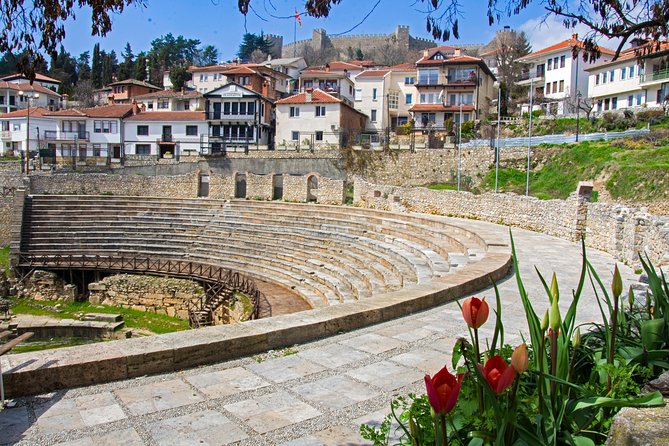
Your Ohrid day starts at the Ancient Theatre of Ohrid. The theatre was built between two hills, and that natural shape helped protect the space from winds. The payoff is sound. You can see why it has incredible acoustics and why it has been used as a main stage for the Ohrid Summer Festival.
Even if you never attend the festival, the theatre gives you something different from the typical ruins view. It is not only about columns and stones. It is about how people designed a space for human voices to carry. That changes how you experience ancient architecture. It feels less like leftover rock and more like an engineered performance venue.
At about 20 minutes, you will not do a deep archaeological study here, but you can still get a lot out of it with a quick visual scan and a moment to imagine sound traveling across the seating area. Wear shoes with good grip, because outdoor ancient sites can be uneven.
More tours based in Skopje:
- Skopje: Matka Canyon, Millennium Cross and Etno Village Tour
★ 4.7 · 1,906 reviews - Skopje: Matka Canyon, Millennium Cross & Village Tour
★ 4.8 · 1,019 reviews - Walking In Skopje
★ 5.0 · 390 reviews - From Skopje:Kosovo in a Day-Group Tour to Pristina & Prizren
★ 4.7 · 372 reviews
Church of the Virgin Mary Peribleptos: Frescoes With Real Names
Next up is the Church of the Virgin Mary Peribleptos, where the spotlight is art. The key detail is that the fresco painting includes some of the earliest works by the medieval painters Michael and Eutychios. The description matters because it anchors the art to people, not just generic labels.
What you will notice when you look at the interior is emotional intensity. The fresco style is described as dramatic and expressive, shaping what Byzantine art called The Renaissance of the Paleologues, the late period of Byzantine creativity. In plain terms, it is art that aims to make you feel something, not just observe.
You typically get about 15 minutes here, so the trick is to focus on a few sections rather than trying to take in everything at once. If you are serious about iconography and fresco programs, ask your guide what scenes to look for first.
Tsar Samuel’s Fortress and Plaoshnik: Layers of Macedonia
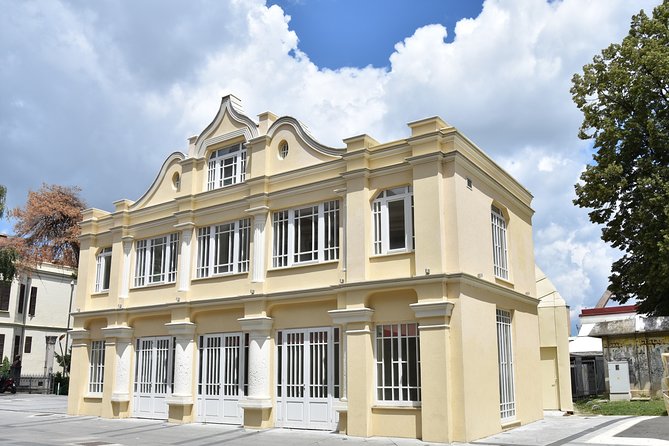
After the Peribleptos church, the tour heads to Tsar Samuel’s Fortress. Recent excavations suggest this fortress may have been built on an earlier fortification dating to the 4th century BC, with a strong possibility that it was tied to Philip II of Macedon. That kind of continuity is what makes Ohrid feel extra compelling: even when buildings change, the strategic location keeps pulling history back to the same hill.
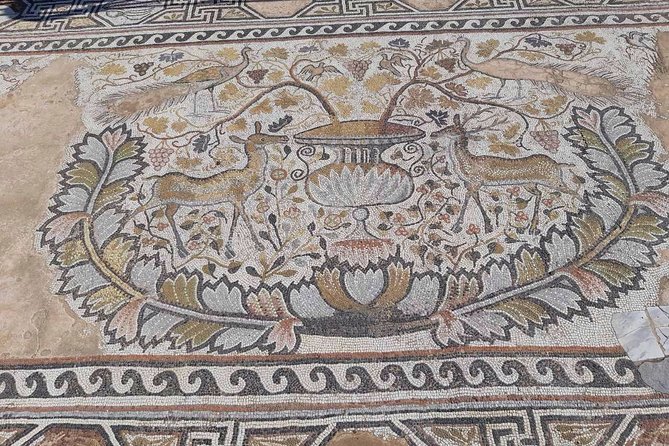
From there, you move to Plaoshnik. This stop is about layers. You go from traces spanning the Bronze Age through the Middle Ages, then toward the Early Christianity period where Christian basilicas and their floor mosaics remain.
The mosaics are the star for most people, because they reveal everyday spiritual life in the region. But the real plot twist is the educational story. Plaoshnik is linked to St Clement, described as the first Slavic archbishop and a creator connected to the Cyrillic alphabet. He is said to have started educational and literary activity there, including opening a Slavic university from which Slavic culture spread.
With about 20 minutes, you will not read every layer like a textbook, but you can understand why this site matters. It is not only religious. It is a big turning point for language and learning in the region.
A practical note: if the weather turns cool or breezy, outdoor ruins plus walking can feel longer than the clock suggests. Keep your layers ready.
St. Jovan Kaneo: The Cliffside Church Photo You Will Remember
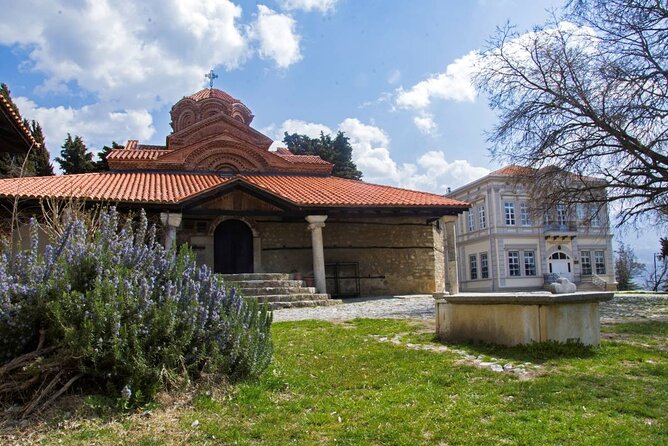
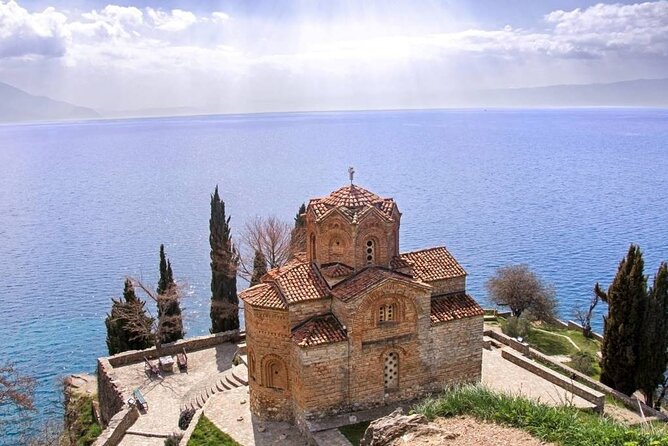
Then comes one of Ohrid’s most iconic visuals, St. Jovan Kaneo. It stands alone on a cliff overlooking Lake Ohrid, above the fishing settlement of Kaneo. This is the landmark many people picture when they think of Ohrid’s old-town silhouettes.
You get about 20 minutes, which is enough for a slow look and a few photos if you manage your angle. The architecture is also described as a combination of Byzantine and Armenian elements, so it is not just a location. It is a style mix that reflects broader cultural exchange.
If you care about photos, arrive ready to experiment with different viewpoints quickly. The cliff gives you angles, but the light can change fast, especially on a lake. A quick conversation with your guide about the best side to shoot from can save time.
Church of Hagia Sophia: Cathedral Status and Fresco Renovation
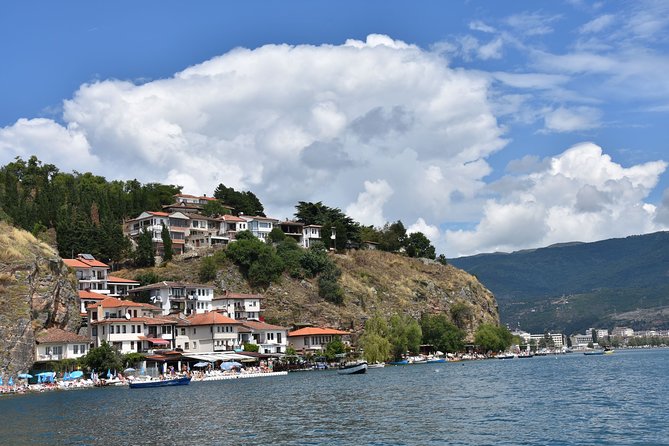
Next is the Church of Hagia Sophia. This one is connected to power. The church served as a cathedral church during Tsar Samoil’s ruling and was described as the central church of the Tsar Samoil patriarchy.
What I appreciate here is the renovation timeline. The church as you see it today was renovated and decorated with frescoes in the time of archbishop Leo between 1037 and 1056. That means you are not just looking at an old space. You are seeing a specific period of artistic work.
You typically get around 15 minutes, so treat it like a focused art-and-context stop. Look for what stands out in fresco sections, then ask your guide what makes this church different from nearby ones. That question alone often turns a quick visit into a meaningful one.
A Coffee Pause on Shirok Sokak Street
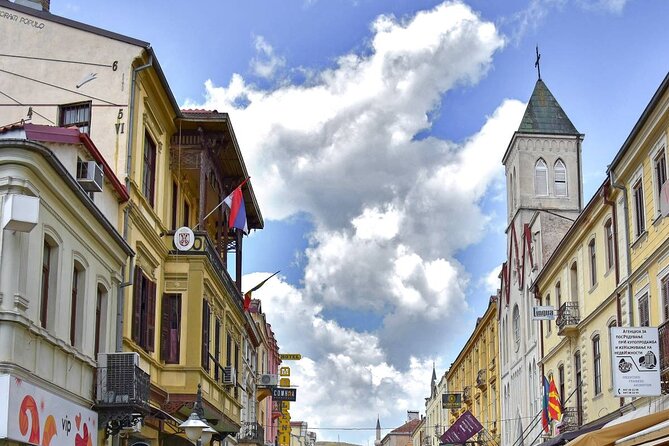
Between the heavier church and archaeological stops, you also get time to have coffee and relax at the Shirok Sokak street cafes. This matters more than it sounds. Ohrid’s sites are emotionally intense, and your brain needs a simple break to absorb it all.
You can use this time to reset your energy, check your photos, and decide if you want to push for a bit more time in churches later. Since this tour is private, your guide can help adjust priorities while still keeping you on track for the full-day flow.
Heraclea Lynchestys: Roman-Era Bones Near Bitola
Once the day transitions toward Bitola, the tour visits Heraclea, located about 2 km from Bitola. It is an archaeological site representing the remains of the old town of Heraclea Lynchestys.
This stop gives you the ancient layer that pairs well with Ohrid’s medieval sites. The town was founded in the 4th century BC by Philip II of Macedon, the father of Alexander the Great. That name keeps showing up across the day, and it ties Macedonia’s ancient political map to real places you can stand on.
You get around 30 minutes, which is helpful here. Archaeological sites can be spread out, and a half hour gives you time to walk and look without feeling like you are sprinting from one viewpoint to the next.
If you love ruins, this is a good match. If ruins are not your thing, you might find you get the most value by focusing on what your guide highlights first and not trying to do a solo tour in your head.
Bitola Museum and the Ataturk Memorial Room
Bitola Museum is likely the surprise stop that gives the day more texture. The museum includes many galleries, but a standout part is the memorial room dedicated to Kemal Mustafa Ataturk, who finished military school in this building.
This is a reminder that Macedonia’s story is not frozen in antiquity. It threads into modern history too. Even if you are not a museum person, this room can be a quick way to connect the place to broader regional history, and it gives you a break from outdoor walking.
You get about 20 minutes here, so prioritize the areas your guide points out. Museums can expand fast, and with limited time the best strategy is focus, not wandering.
Price and What You’re Really Paying For
At $239.19 per person for an 11-hour private tour, the price is not “cheap,” but it is also not hard to justify when you look at what is included. You get round-trip private A/C transport, hotel pickup and drop-off, and an experienced English-speaking guide/driver. That is the core value on a day that covers two towns and multiple stops.
Where you will feel extra cost is in entrance fees and in food and drinks, since these are not included. This matters for budgeting because church and museum tickets can add up. Before you go, think about whether you prefer to cover everything at once at the start, or pay each site ticket as you arrive. Either way, plan a little buffer.
If you are traveling with one or two people, private tours can become a smart value compared to piecing together taxis and separate guided visits. If you are traveling solo, it can still work, but you’ll want to be sure you truly want the convenience of a car and a guide for the full day.
Who This Tour Suits Best
I’d point this tour at three types of travelers:
- You want a guided day with enough structure to see the big Ohrid and Bitola sights without the stress of planning.
- You care about churches, mosaics, and major historical connections, especially the Ohrid sites and Plaoshnik’s cultural links.
- You prefer private pacing, so you can ask questions and slow down when something catches your eye.
It may be less ideal if you are traveling with limited mobility or if you dislike walking around uneven historical sites. The tour notes that comfortable walking shoes are recommended, and you’ll likely do a decent amount of short transfers and steps across multiple locations.
Tips to Make the Day Feel Easier
A few practical habits can help you enjoy this more:
- Wear comfortable walking shoes. Even when each stop is short, the day adds up.
- Bring a light layer. Lake areas can feel cooler, and weather changes happen fast.
- Keep some cash or a card ready for entrance tickets at each stop, since admission is not included.
- Use your coffee time on Shirok Sokak to reset your energy and review your photo shots.
- If your guide offers flexibility, ask early which stops matter most to you. That helps the day feel personal rather than rushed.
The overall experience is built around a guide who explains sights in detail and stays available for questions. In at least one case, the tour ran until around 7 pm, which tells me the guide approach can be more attentive than a strict drop-and-go rhythm. Just know you should still respect the day’s pacing and your own stamina.
Should You Book This Ohrid and Bitola Private Tour?
I’d book it if you want a straightforward, guided way to hit the Ohrid essentials and then continue to Bitola the same day. The combination of cliff views at St. Jovan Kaneo, major church art at Peribleptos and Hagia Sophia, and the education and mosaic connections at Plaoshnik is a strong match for people who like meaning behind the stones. Add Heraclea’s archaeological remains and Bitola Museum’s Ataturk memorial room, and the day feels well rounded.
I’d think twice if you are budget-tight, because entrance fees and food are on you. I’d also be cautious if you want a slow vacation day, since 11 hours means you will be on the move and walking between stops.
If you decide late, the tour includes free cancellation up to 24 hours in advance for a full refund, so you have some breathing room if your schedule is still flexible.
FAQ
How long is the private tour from Skopje to Ohrid and Bitola?
The duration is approximately 11 hours.
What is the price per person?
The price is $239.19 per person.
Is pickup and drop-off included?
Yes. Pickup and drop-off are included from your hotel or any preferred location in Skopje, and the tour ends back at the meeting point.
Is this tour private?
Yes. It is a private tour, and only your group participates.
What transportation is provided?
You get round-trip transfers in a comfortable air-conditioned car or minivan.
Are entrance fees included?
No. Entrance fees are not included, and you pay entrance fees when you arrive.
Are food and drinks included?
No. Food and drinks are not included.
Will I have an English-speaking guide?
Yes. The tour includes an experienced English-speaking tour guide/driver.
Do I receive a ticket on my phone?
Yes. The tour uses a mobile ticket.
Is there free cancellation?
Yes. You can cancel up to 24 hours in advance for a full refund.
Full Days to Fill from Skopje
- Ohrid UNESCO Heritage: Full-Day Guided Tour from Skopje
★ 4.9 · 363 reviews - Private Full Day Trip to Pristina and Prizren from Skopje
★ 5.0 · 60 reviews - Ohrid UNESCO Heritage: Full-Day Guided Tour from Skopje
★ 4.5 · 45 reviews - Ohrid Full Day Tour from Skopje
★ 5.0 · 44 reviews - Full-Day Tour of Ohrid from Skopje
★ 4.9 · 40 reviews
New on the site from Skopje
- Vinica, Lesnovo Monastery and Kratovo tour from Skopje★ 5.0 · 1 review
- Skopje city tour★ 5.0 · 1 review
- Traditional cooking class at home★ 5.0 · 1 review
- Private Skopje Tour with Visit to Vodno Mountain and Matka Valley★ 5.0 · 1 review
- Relaxing Walking Tour in Skopje★ 5.0 · 1 review
- Private Full-Day Tour of Ohrid from Skopje with Transfers★ 5.0 · 1 review
Bitola Day Trips, compared.
Full Day Jeep Safari Pelister Tour from Ohrid and or Bitola
Read our review →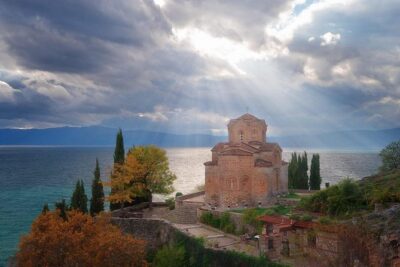
Private Full-Day to Ohrid and Bitola from Skopje
Read our review →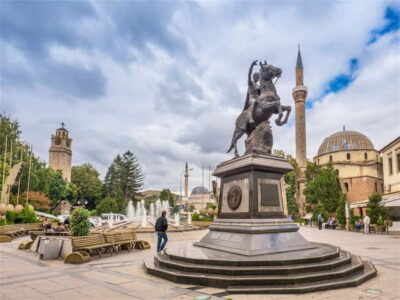
Browse the lists this tour appears in