
Reviewed · OHRID TOURS
Ohrid from Skopje
One cliff church, one whole lake world.
This day trip strings together medieval Ohrid with ancient ruins and a monastery visit, plus a scenic ride that feels like you’re traveling through the country’s heart. You’ll get the classic view from St. Jovan Kaneo, then round out the story with sites tied to early Christianity and learning.
I like how the day is timed. You spend about 3 hours on the transfer, then you get roughly 4.5 hours of guided walking in Ohrid itself. I also love the mix of stops: churches and fortresses are paired with archaeological places like Bay of Bones and Plaoshnik, so it never feels like a repeat of the same kind of sight.
The main drawback is simple, you’ll be on your feet on uneven ground and cobblestones for much of the day, so it may not suit everyone. It also notes that people over 95 years are not suitable.
In This Review
- Key things that make this Ohrid day trip work
- The Skopje to Ohrid route: Mavrovo to “Macedonian Switzerland”
- Entering the old walls at Gorna Porta, then Mary Perivleptos
- Plaoshnik and St. Clement’s Church, built on earlier foundations
- Potpesh lake break and St. Sofija Church’s long foundation story
- Lunch in an Ohrid ethno restaurant, with stories as part of the meal
- Bay of Bones: the museum on water that makes ancient life tangible
- Sveti Naum monastery and the border glance toward Pogradec
- Price and logistics: is $212 good value for this 10-hour format?
- Who should book this Ohrid from Skopje trip, and who should skip it?
- Should you book this tour?
- FAQ
- Where is pickup in Skopje?
- How long is the full experience?
- How long is the transfer to Ohrid?
- How long is the guided tour once you reach Ohrid?
- Is this a private tour?
- What’s included in the price?
- Do you skip the ticket line?
- What languages are available for the guide?
- What should I bring for this day trip?
- Is it suitable for people over 95 years old?
Key things that make this Ohrid day trip work
- St. Jovan Bigorski on the way in, including its famous wood carving
- Gorna Porta and the fortress circuit, with the story of King Samuel woven in
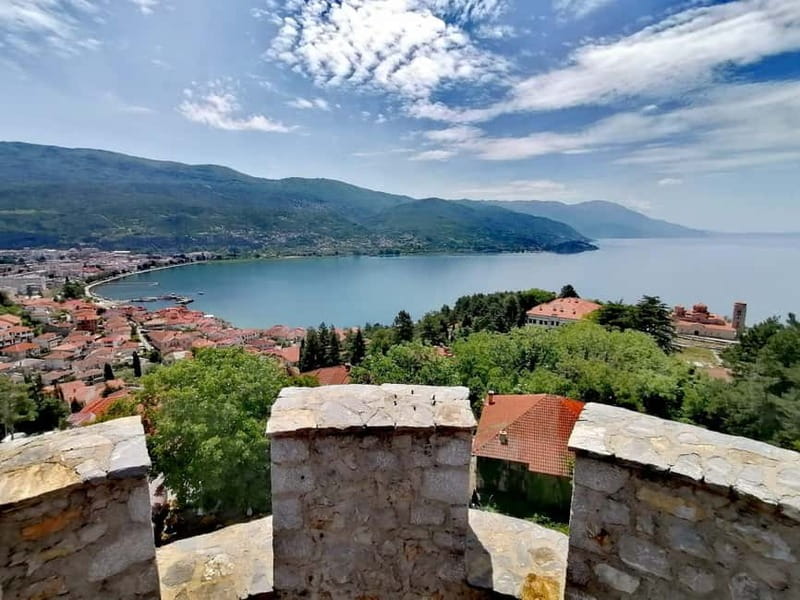
- The classic St. Jovan Kaneo viewpoint above Lake Ohrid
- Plaoshnik and the St. Clement church built in 893 on earlier foundations
- Bay of Bones on the water, with an authentic reconstruction of a pile dwelling settlement
- Sveti Naum monastery, plus a look at Albanian town Pogradec from the border area
The Skopje to Ohrid route: Mavrovo to “Macedonian Switzerland”
Your day starts in Skopje with pickup from a hotel or apartment, then the transfer to Ohrid takes about 3 hours. The route passes through Mavrovo National Park, so even before you reach the UNESCO core, you get that mountain-country feeling.
There’s also a stop at St. Jovan Bigorski, described as a 1000-year-old monastery. If you only visited Ohrid’s churches, you’d still get great photos, but this detour adds texture. It shows you another layer of Orthodox heritage before you reach the lake.
The drive continues along the river Radika, a stretch often called Macedonian Switzerland because of the colors, villages, and mountain views. That’s not just scenery for scenery’s sake. On a long day like this, it helps you arrive in Ohrid already in the right mood, instead of feeling like you’re straight from a city commute.
More tours around Lake Ohrid:
Entering the old walls at Gorna Porta, then Mary Perivleptos
Once you arrive, you go through Gorna Porta, the gate that takes you into the area of Ohrid’s ancient walls and the Fortress of Ohrid. This is one of those practical touches that makes a guided walk easier to follow. You start with context, so the later stops make sense fast.
Your first major church stop is Church of Holy Mary Perivleptos, built in the 13th century. The big draw here is its fresco painting, which you’ll want to see slowly because the guide will connect details to the wider religious and artistic story of the region.
From there, you move through the arc of ancient Ohrid. You’ll see the Ancient Theater, described as a Roman theater from the 3rd century BC. It’s a reminder that Ohrid was important long before the medieval church spotlight took over.
Next comes the Fortress of Samuel, which is tied to the Kingdom of King Samuel. This part helps you understand why the city is more than a backdrop. Samuel’s capital period is part of the reason people treat Ohrid like a living museum, not just a collection of pretty churches.
Plaoshnik and St. Clement’s Church, built on earlier foundations
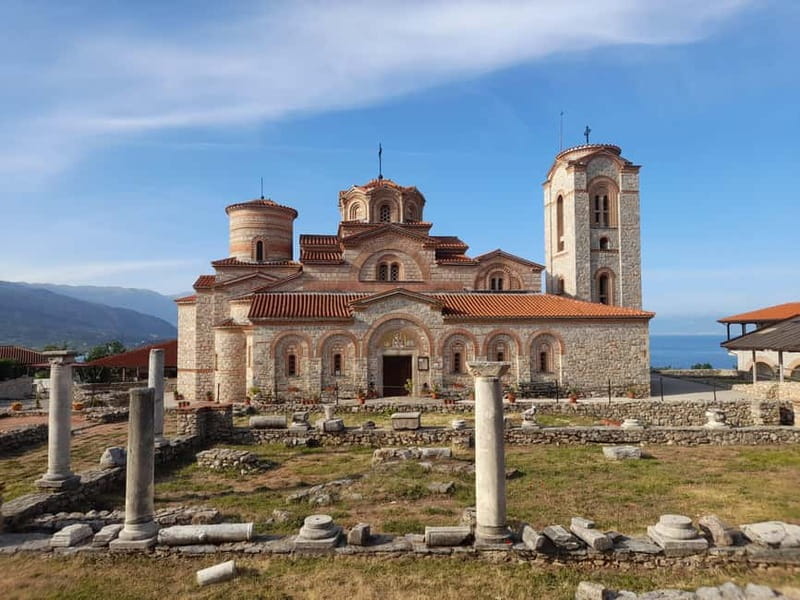
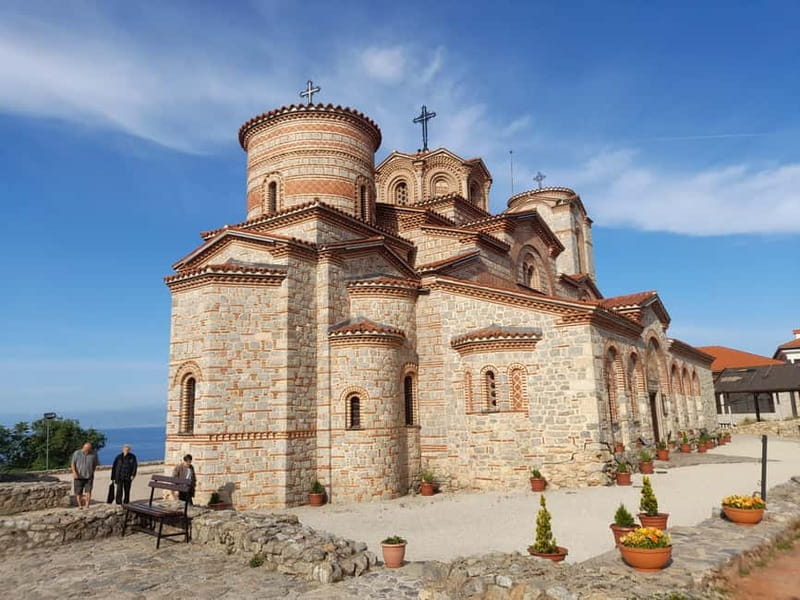
Plaoshnik is one of the most meaningful stops on the route. It’s both an archaeological site and a holy place, linked to how Christianity took root and evolved over centuries.
Here you visit the St. Clement’s Church, built in 893, on the foundations of an earlier Christian basilica. That detail matters. It tells you that what you see today is layered, and it also hints at why Ohrid became known as a cradle of Christianity and learning from the antique era until modern times.
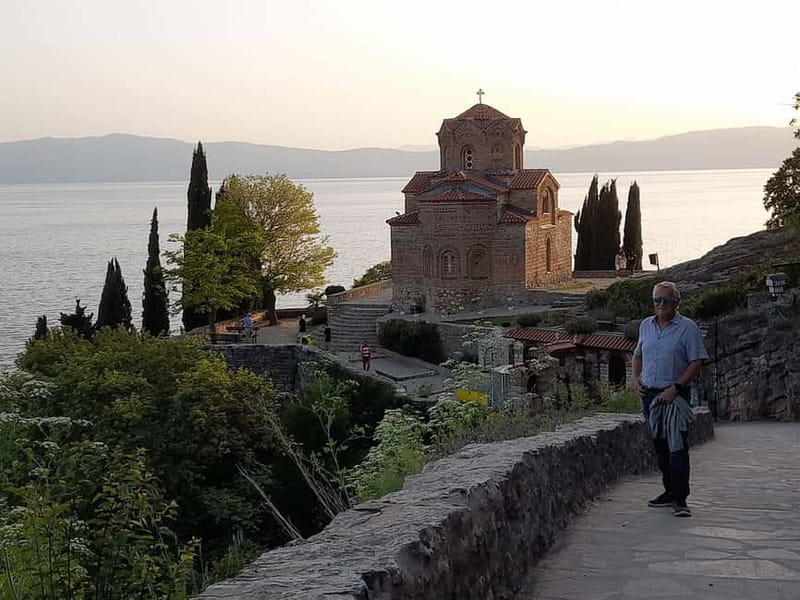
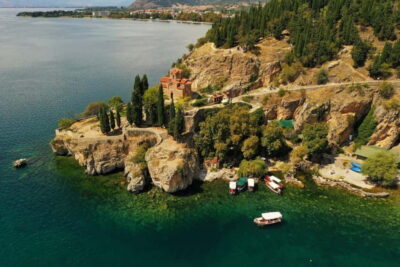
Then you’ll walk toward St. Jovan Kaneo, often described as the Macedonia postcard church of Ohrid. It’s a church from the 13th century perched on the cliff above the lake. This is the kind of stop where you’ll want to pause, because the view does half the explaining for you.
Why it’s worth it: this is where the city’s identity becomes visual. Old Ohrid isn’t hidden behind modern clutter. It’s literally placed over the water, framed by stone and sky.
Potpesh lake break and St. Sofija Church’s long foundation story
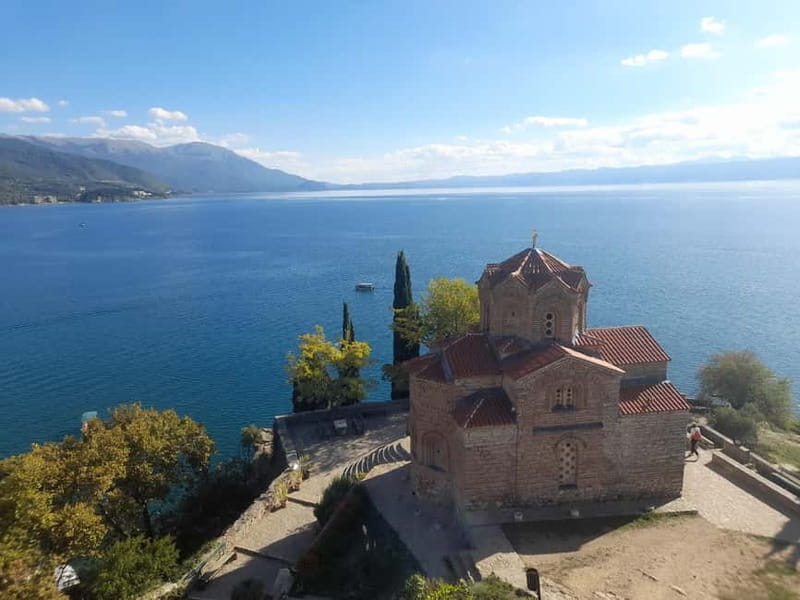
After St. Jovan Kaneo, there’s a short break at the lake near Potpesh beach. You can grab coffee or a beer if you want, which is a smart way to avoid the classic problem on long historic days: staring at stone for too many hours without a reset.
Then you head back through the typical houses of the Old Town. These lanes are part of the experience, because they show you how the city lived around all that religious and archaeological weight.
Your next major stop is the St. Sofija Church. This is one of those buildings that feels bigger than its footprint because it carries layers. The current church was built on the foundations of a metropolitan cathedral that was demolished in the first decade of the 6th century.
If you like how history keeps stacking instead of starting over, St. Sofija will click. It also fits the tour’s theme: Ohrid as a city where the religious story and the architectural story moved together.
You’ll also get an entrance ticket included for St. Sofija, so you’re not losing time hunting for documents or waiting at the counter.
Keep Ohrid open a little longer:
- Ohrid: Monastery Winery Tour and Wine Tasting
★ 4.8 · 124 reviews - 1.5 Hour Ohrid Lake Sunset Cruise
★ 4.5 · 99 reviews - Paragliding above Ohrid
★ 5.0 · 90 reviews - Shared Cruise to St.Naum Monastery
★ 4.5 · 76 reviews
Lunch in an Ohrid ethno restaurant, with stories as part of the meal
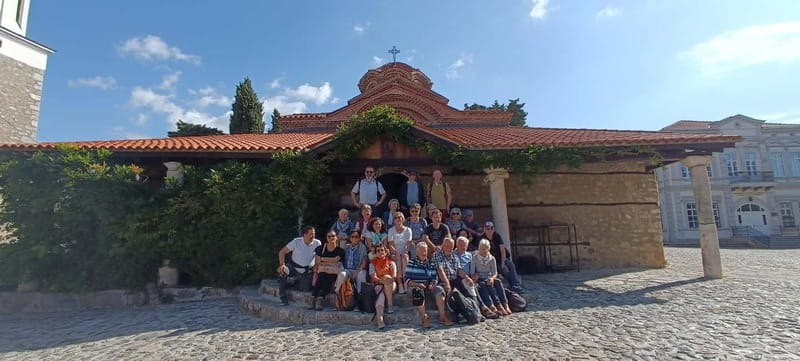
After the Ohrid guided portion, you sit down in a traditional Ohrid ethno restaurant. Lunch is included, and it’s not just about food. The hosts are described as the type who love to tell stories, and that matters on a day like this where you’ve already collected a lot of cultural context.
It’s also mentioned that they sometimes provide customers something to draw for memory and remembrance. Even if you don’t treat that like a souvenir, it’s a nice reminder that this is still a living culture, not a theme park of old stones.
Practical tip: with a full day like this, eat like a traveler, not like a spectator. Have lunch, then save your energy for the lakeside and monastery part later, where walking tends to ramp up again.
Bay of Bones: the museum on water that makes ancient life tangible
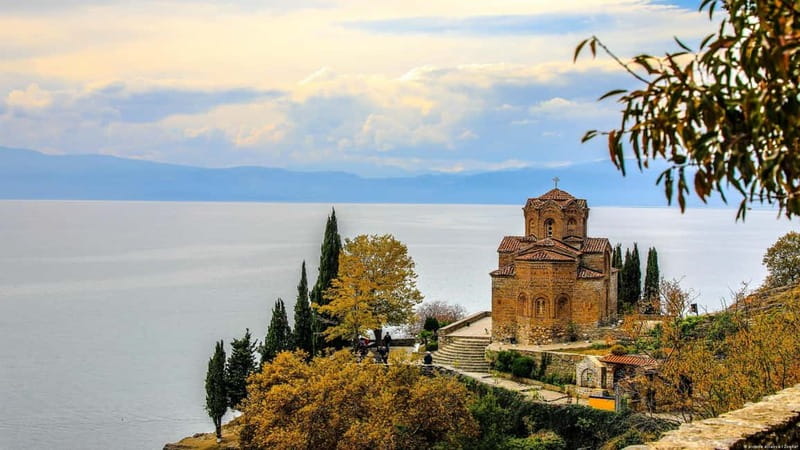
The later part of the day begins with Bay of Bones, described as a museum on water. It’s an archaeological complex plus an authentic reconstruction of a pile dwelling settlement dated between 1200 and 700 BC.
This stop gives you something different from the churches and fortresses. Instead of focusing on later medieval identity, you get a view of everyday life much earlier, and you can connect it to why the lake mattered so much.
If you’ve ever wondered how people lived on lake edges before modern infrastructure, this is the kind of answer that makes the rest of Ohrid click. The city’s religious significance gets plenty of attention, but this adds the human layer.
Sveti Naum monastery and the border glance toward Pogradec
From Bay of Bones, you head to Sveti Naum Monastery, dedicated to the enlightener Saint Naum. This is described as having beautiful fresco painting and rare beauty and tradition from the 9th century.
The setting helps. You’re approaching the border with Albania, so the landscape and the sense of place shift a bit. The itinerary even notes you’ll have a possibility to take a look at the Albanian town Pogradec.
That border-view detail is useful. You finish the day with the feeling that Ohrid isn’t an isolated bubble. It’s in a crossroads area, and the cultures around it have always intersected in real time.
Then you return to Skopje later in the afternoon, completing the loop from medieval lake city back to your starting point.
Price and logistics: is $212 good value for this 10-hour format?
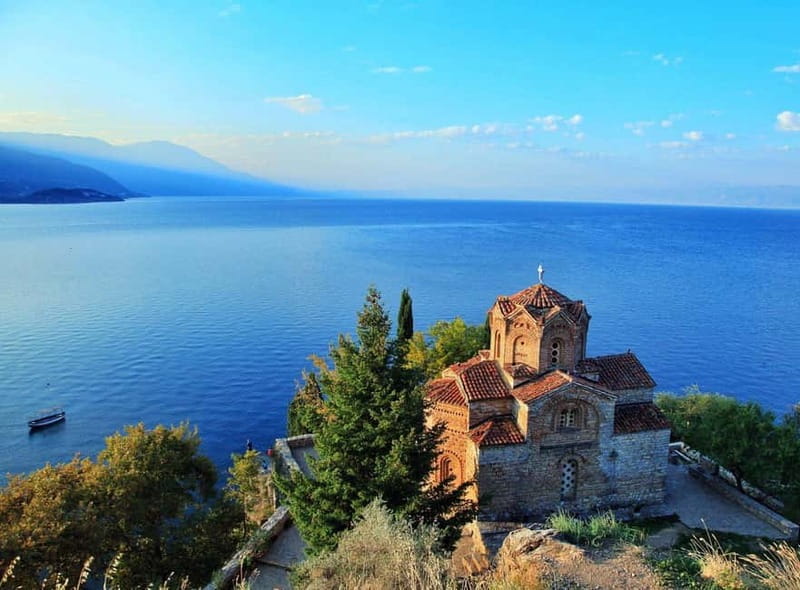
The price is listed at $212 per person, and the value comes from how much is wrapped together.
You’re getting round-trip transfer, a live guide, snacks and water in the vehicle, a traditional lunch, and entrance tickets for St. Sofija Church plus Plaoshnik and St. Clement’s Church. On top of that, it notes a skip-the-ticket-line benefit.
The real question is whether you’ll use the inclusions. If you want a structured day where someone else handles timing and navigation, this is set up for you. If you prefer to wander independently with no schedule pressure, you might not want a tour that packs in a lot of key stops.
Comfort-wise, the day is long. The total duration is 10 hours, and even though you have guided time inside Ohrid, you also spend plenty of time traveling. The route includes cobblestone walking and uneven surfaces, so wear comfortable shoes, even if the itinerary mentions sandals. You might also appreciate swimwear and a change of clothes, since the Potpesh lake break is a window where cooling off could be tempting.
One more point on the guide: in a recent booking, the guide Gushevski Vojislav stood out for being thoughtful, experienced, and able to give an in-depth overview of local culture alongside the sites. On an itinerary like this, a good guide changes everything, because so many stops are about meaning, not just appearance.
Who should book this Ohrid from Skopje trip, and who should skip it?
I think this tour suits you if you want a one-day hit of Ohrid’s big story: Christianity, learning, medieval art, ancient ruins, and lakeside monasteries. You’ll like it most if you enjoy guided explanations and you want to see multiple famous stops without timing the logistics yourself.
Skip it if you’re chasing a slow, beach-only day. This is a structured route with history-focused stops, so you won’t have hours to spread out on the shore.
Also consider pace. It’s not labeled as accessible, and it’s explicitly not suitable for people over 95. If you have mobility concerns, it’s worth being cautious because you’ll cover a lot of stone streets and steps across several major viewpoints.
Should you book this tour?
If your priority is to leave Skopje and come back with a full grasp of why Ohrid is treated like a center of faith and art, this tour is a strong pick. The combination of fortress sights, Plaoshnik’s layered Christian site, the lake cliff view at St. Jovan Kaneo, plus Bay of Bones gives you variety in one day.
If you want a calm pace or you’re sensitive to long walking, you may want a shorter, more flexible plan instead. For many people, though, this is a smart value because you’re paying for organization, guide interpretation, lunch, and key entrance tickets all in one go.
FAQ
Where is pickup in Skopje?
You get picked up from your hotel or apartment in Skopje, and you’re brought back at the end of the tour.
How long is the full experience?
The total duration is 10 hours.
How long is the transfer to Ohrid?
The transfer to Ohrid lasts about 3 hours.
How long is the guided tour once you reach Ohrid?
The guided tour in Ohrid is about 4.5 hours.
Is this a private tour?
Yes, it’s listed as a private group.
What’s included in the price?
The tour includes transfer to Ohrid and back, the guided tour, snacks and water in the vehicle, entrance tickets for St. Sofija Church and Plaoshnik with St. Clement’s Church, and lunch in a local traditional restaurant.
Do you skip the ticket line?
Yes, it notes skip the ticket line.
What languages are available for the guide?
The live guide is available in English, German, Serbian, Bosnian, and Bulgarian.
What should I bring for this day trip?
Bring sunglasses, swimwear, a change of clothes, sandals, a camera, and sunscreen.
Is it suitable for people over 95 years old?
No. The tour is listed as not suitable for people over 95 years.
New on the site from Ohrid
- Ohrid city walking tour★ 5.0 · 1 review
- Ohrid: Watersport Adventures★ 5.0 · 1 review
- Yoga classes★ 5.0 · 1 review
- Private Transfer from Ohrid to Airport Skopje★ 5.0 · 1 review
- Hiking to Magaro peak from Ohrid★ 5.0 · 1 review
- Sightseeing Transfer from Ohrid to Skopje Via National Park Mavrovo★ 5.0 · 1 review
Ohrid Tours, compared.
Old Town Panoramic Boat Cruise and Tito’s Residence
Read our review →
Full-Day Group Tour to the UNESCO City of Ohrid
Read our review →


Browse the lists this tour appears in